|
|
|
Results An estimated 58,200 children were abducted by a nonfamily perpetrator in the study year, including an estimated 115 victims of stereotypical kidnappings (table 1). As expected, the number of stereotypical kidnapping victims reported in the Household Surveys was not sufficient to produce a reliable estimate of their incidence from that source; therefore, all of the data on this subset of victims come from the LES. In the following discussion, which describes all nonfamily abducted children and the subset of child victims of stereotypical kidnappings, those who experienced stereotypical kidnappings are such a small part of the overall category that they barely influence the aggregate patterns. Table 1: Estimates of Nonfamily Abducted Children
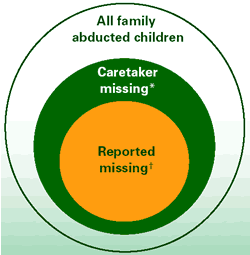
According to the NISMART–2 definitions, an estimated 57 percent of all child victims of nonfamily abduction (approximately 33,000 children) were missing from their caretakers in the study year. (See table 1 and the accompanying diagram.) Moreover, an estimated 21 percent of all nonfamily abducted children (approximately 12,100) were also reported to law enforcement as missing. (Unfortunately, both of these numerical estimates are quite imprecise and could actually be quite a bit smaller or larger because they are based on very small numbers of cases.) Stereotypically kidnapped children in this study were considerably more likely to be caretaker missing and reported as missing compared with nonfamily abducted children overall, with 78 percent of victims of stereotypical kidnappings reported missing. Because the estimates are based entirely on cases reported to law enforcement, the estimate for the number of stereotypically kidnapped children who were missing from their caretakers does not include any children who were kidnapped and not reported to the police. Such children may exist; however, given the seriousness of stereotypical kidnapping episodes, they are presumed to be extremely rare. Recent, notorious nonfamily abductions have often involved quite young children, such as 5-year-old Samantha Runnion of Orange County, CA. However, young children, despite the publicity accorded their abduction, are not the most frequent victims of nonfamily abduction. Eighty-one percent of nonfamily abducted children and 58 percent of stereotypical kidnapping victims were age 12 or older (table 2). Nonfamily abduction victims overall were particularly concentrated among the oldest groups, with 59 percent being 15–17 years old. Table 2: Characteristics of Nonfamily Abducted Children
Girls were the predominant victims of nonfamily abductions overall and of stereotypical kidnappings as well (65 percent and 69 percent, respectively), reflecting the frequency of sexual assault as a motive for many nonfamily abductions. Black children appear to be disproportionately represented among the victims of nonfamily abductions but not among stereotypical kidnapping victims. However, this disproportion is not large enough to exclude the possibility that it is a result of random factors in the sample selection. For similar reasons, the absence of any nonfamily abducted children from the Northeast cannot be considered conclusive evidence of lower rates in that region. Because kidnapping prevention focuses on the danger of strangers, it may be surprising that the majority of nonfamily abduction victims (53 percent) are abducted by persons known to the child: 38 percent of nonfamily abducted children were abducted by a friend or long-term acquaintance, 5 percent by a neighbor, 6 percent by persons of authority, and 4 percent by a caretaker or babysitter (table 3). Strangers abducted 37 percent of the nonfamily abduction victims, and slight acquaintances (considered similar to strangers and including persons who were known but seen infrequently or who may have recently befriended a child or family in order to abduct the child) abducted 8 percent. Stereotypical kidnappings, consistent with the most publicized nonfamily abduction cases, are limited by definition to cases perpetrated by strangers and slight acquaintances. Table 3: Characteristics of Nonfamily Abduction Perpetrators
About 1 in 5 victims of nonfamily abductions (21 percent) and almost half the victims of stereotypical kidnappings (48 percent) were abducted by multiple perpetrators (table 3). In instances of multiple perpetrators, episodes were classified according to the child’s relationship with the most closely related perpetrator. Thus, an abduction by a babysitter and her boyfriend, who was a stranger to the child, was classified as an abduction by a babysitter. Counting only the main perpetrators (and not the accomplices), 25 percent of the nonfamily abduction victims and 7 percent of the stereotypical kidnapping victims were abducted by females. Perpetrators in their twenties were the main abductors of 42 percent of all nonfamily abducted children and of 36 percent of children who were stereotypically kidnapped. Teenagers abducted 25 percent of all nonfamily abducted children. Homes or yards were the origination point in only a minority of the abductions of all nonfamily abducted children (23 percent) and of those who were stereotypically kidnapped (19 percent) (table 4). Instead, streets, parks or wooded areas, and other public areas (i.e., generally accessible spaces) were the places from which children were typically abducted. While most of the nonfamily abducted children were moved or taken, 35 percent were detained in an isolated location for at least an hour. The majority of stereotypical kidnapping victims were detained in addition to being moved or taken. Table 4: Characteristics of Nonfamily Abductions
When children were moved, the most common modes of conveyance were carrying the child, taking the child in a vehicle, and walking with the child (table 5). Most children were taken into vehicles (45 percent) or to the perpetrator’s home (28 percent) (table 5). Fourteen percent of the stereotypically kidnapped children were moved more than 50 miles. Table 5: Details Related to the Movement of Nonfamily Abducted Children
Criminal assaults were a motive in most of the nonfamily abductions (table 6). Close to half of all nonfamily abduction victims and stereotypical kidnapping victims were sexually assaulted, while about a third were otherwise physically assaulted. Seven percent of the nonfamily abduction victims and 20 percent of the stereotypical kidnapping victims were robbed. Table 6: Additional Crime Elements in Nonfamily Abductions
Weapons were involved in abducting 40 percent of all nonfamily abduction victims and 49 percent of stereotypical kidnapping victims. Knives and guns were both frequently used. Ransom was demanded for 4 percent of all nonfamily abducted children and 5 percent of the subset who were stereotypically kidnapped. A considerable quantity of information on the exact duration of the episodes was missing (32 percent of all nonfamily abducted children and 18 percent of stereotypical kidnapping victims) (table 7). Among those children with data on episode duration, 29 percent experienced nonfamily abductions that lasted 2 hours or less, and 10 percent had abductions that lasted 24 hours or more (table 7). Table 7: Duration and Outcome of Nonfamily Abductions
Stereotypical kidnappings were defined as episodes lasting overnight (unless there was a homicide, a ransom, or an intent to keep or transport the child 50 miles or more), so it is noteworthy that only 10 percent of stereotypical kidnapping victims had episodes lasting 24 hours or more. Only a very small minority (4 percent) of victims of the most serious stereotypical kidnappings had abductions that were not resolved at the time of data collection. Nonetheless, 40 percent of stereotypical kidnapping victims were killed, in addition to the 4 percent who were still missing. An additional 32 percent of children who were stereotypically kidnapped received injuries requiring medical attention. For 53 percent of all nonfamily abduction victims, police were not contacted about the episode for any reason, not even to report the crime (table 8). The reasons for not reporting suggest that some portion of these nonfamily abductions were not thought to involve serious threats to the child. Table 8: Police Contact for Nonfamily Abductions
The seasonal distribution of nonfamily abductions and stereotypical kidnappings indicates only that they occur less frequently in winter (table 9). Table 9: Season of Nonfamily Abductions
|
||||||||||||||||||||||||||||||||||||||||||||||||||||||||||||||||||||||||||||||||||||||||||||||||||||||||||||||||||||||||||||||||||||||||||||||||||||||||||||||||||||||||||||||||||||||||||||||||||||||||||||||||||||||||||||||||||||||||||||||||||||||||||||||||||||||||||||||||||||||||||||||||||||||||||||||||||||||||||||||||||||||||||||||||||||||||||||||||||||||||||||||||||||||||||||||||||||||||||||||||||||||||||||||||||||||||||||||||||||||||||||||||||||||||||||||||||
This is an archive page that is no longer being updated. It may contain outdated information and links may no longer function as originally intended.