Juvenile justice
Group Randomized Trial of Restorative Justice Programming to Address the School to Prison Pipeline, Reduce Aggression and Violence, and Enhance School Safety in Middle and High School Students
Kentucky Juvenile Justice Reform Evaluation: Assessment of Community-Based Services for Justice-Involved Youth
AMBER Alert in Indian Country: Protecting Children in Tribal Communities
Correlates of and Consequences for Bully-Victims in a Sample of Serious Adolescent Offenders
Appropriate and Effective Use of Security Technologies in U.S. Schools
School Discipline Consensus Report: Strategies From the Field To Keep Students Engaged in School and Out of the Juvenile Justice System
Posttraumatic Overmodulation, Callous-Unemotional Traits, and Offending Among justice-involved Youth
Finding Effective Ways to Reduce Truancy: An Evaluation of the Ramsey County Truancy Intervention Programs, Executive Summary
Finding Effective Ways to Reduce Truancy: An Evaluation of the Ramsey County Truancy Intervention Programs, Final Technical Report
The Impact of Validity Screening on Associations Between Self-Reports of Bullying Victimization and Student Outcomes
Negotiating Ethical Paradoxes in Conducting a Randomized Controlled Trial Aligning Intervention Science With Participatory Values
The Rolling Hotspot? Perceptions of Behavioral Problems on School Buses Among a Nationally Representative Sample of Transportation Officials
Implications for Practice Risks to Youth in Boomtowns
Racial/Ethnic Differences of Justice-Involved Youth in Substance-Related Problems and Services Received
Race and Ethnic Differences in Mental Health Need and Services Received in Justice-Involved Youth
Patterns of Change in Adolescent Dating Victimization and Aggression During Middle School
Disputatiousness and the Offender-Victim Overlap
Locked Out: Improving Educational and Vocational Outcomes for Incarcerated Youth
Leveraging the Every Student Succeeds Act To Improve Educational Services in Juvenile Justice Facilities
On Track: How Well Are States Preparing Youth in the Juvenile Justice System for Employment?
Functional Family Therapy-Gangs: Adapting an Evidence-Based Program To Reduce Gang Involvement
Federal Agencies Work Toward Reducing Opioid Impact on Youth
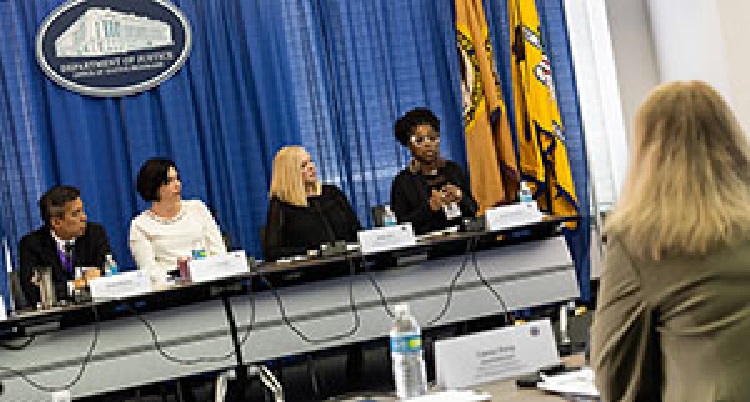
WASHINGTON, D.C. – The anecdotal evidence is staggering: Children as young as 12 raising their siblings because their parents are lost in addiction; kids who learn to count by separating pills for drug-addicted parents; juveniles adjusting to life with sober foster parents after spending years learning to cope with parents who were always high.
These were just a few examples provided by the Department...