Violent crime
Probing menstrual bloodstain aging with fluorescence spectroscopy
Gunshot-victim cooperation with police investigations: Results from the Chicago Inmate Survey
A Qualitative Examination of Collaborative Infrastructure within Sexual Assault Response Teams
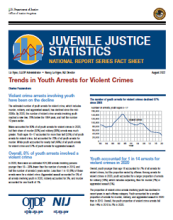
Trends in Youth Arrests for Violent Crimes
Drug Overdose Evidence: How Intelligence Collection and Analysis of Drug Overdoses Can Improve Drug Investigations and Lead to Major Drug Traffickers
Predictors of Prosecutorial Decisions in Reports of Child Sexual Abuse
Contextual Influences on the Sentencing of Individuals Convicted of Sexual Crimes
Longitudinal Follow-up in the National Survey of Teen Relationships and Intimate Violence (STRiV)
Evaluation of Technology-based Advocacy Services (ETA): Technical Report, Executive Summary
Evaluation of Technology-based Advocacy Services (ETA): Technical Report
Tribal Crime, Justice, and Safety
Tribal Crime, Justice, and Safety, Part 1
Research indicates that Native American persons experience crime victimization at higher rates than non-Native people. Furthermore, the unique position of American Indian and Alaska Native tribes as both sovereign nations and domestic dependents of the U.S. creates jurisdictional complexities in responding to crime, justice, and safety. Senior social and behavioral scientist Christine (Tina) Crossland discusses NIJ’s research on these topics, especially on the prevention of violence towards American Indians and Alaska Natives. Communications Assistant Stacy Lee Reynolds hosts.